
Ghana deports 42 Nigerians for prostitution

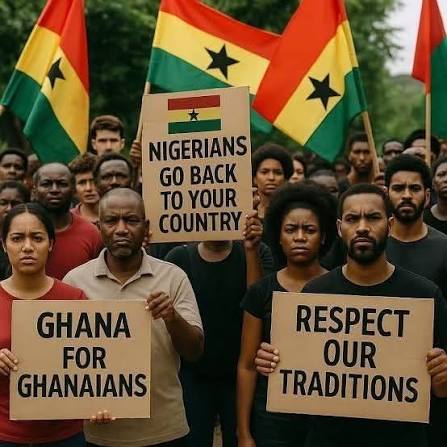
Ghana Deports 42 Nigerians for ProstitutionIntroductionThe recent deportation of forty-two Nigerian nationals from Ghana, purportedly on grounds of engaging in prostitution, has brought to the forefront complex issues surrounding migration, national security, transnational crime, and bilateral relations within the Economic Community of West African States ECOWAS framework.
While sovereign nations possess the inherent right to enforce immigration laws and maintain public order, such actions, particularly involving neighboring states with deep historical and economic ties, necessitate careful scrutiny.
This event raises critical questions about the mechanisms of undocumented migration, the exploitation inherent in human trafficking, and the legal processes governing expulsion within a regional bloc committed to free movement. Understanding the context of this deportation requires examining the legal justifications employed by the Ghanaian authorities against the backdrop of regional commitments and humanitarian concerns.Legal and Diplomatic Implications of DeportationGhana’s action was officially framed as an enforcement measure against individuals violating the country’s immigration and public order laws.
Prostitution, while often viewed through a moral lens, can be criminalized under national statutes, particularly when associated with organized syndicates or illegal stay. For ECOWAS member states, the protocol on free movement guarantees the right of citizens to live and work in other member states, contingent upon proper registration after a specified period.
Allegations of criminal activity, such as prostitution, often serve as the legal threshold for revoking residency rights and initiating deportation proceedings.The swiftness and scale of this particular deportation, however, place diplomatic strain on Ghana Nigeria relations. Nigeria, as the regional powerhouse, often views such mass deportations with concern, viewing them potentially as breaches of the spirit, if not the letter, of ECOWAS agreements. While Ghana maintains its right to safeguard its social fabric, the Nigerian government typically insists on due process for its citizens, demanding assurances that fundamental human rights were upheld during detention and removal.
The ambiguity often lies in distinguishing between voluntary sex work and forced labor or trafficking, a distinction crucial for determining the severity of the violation and the appropriate response.The Nexus of Migration and ExploitationThe deportation highlights a persistent challenge in West Africa: the vulnerability of economic migrants to transnational criminal networks. Many individuals involved in sex work abroad are often victims of trafficking or are forced into the trade due to extreme economic hardship in their home countries. In Nigeria, high unemployment and poverty rates drive many young women to seek opportunities across the border. Criminal elements, exploiting these vulnerabilities, facilitate irregular migration routes, promising employment only to subject migrants to exploitative conditions, including debt bondage.The Ghanaian authorities’ stated justification of tackling prostitution often masks the deeper issue of human trafficking.
Effective law enforcement in this context requires not just deportation, but sophisticated intelligence gathering to dismantle the syndicates that facilitate this trade. Simply removing the individuals perpetrating or enduring the trade does little to address the root causes—economic disparity and criminal organization—that allow these networks to flourish across borders. A truly effective response would involve joint task forces focused on investigation and prosecution of traffickers, rather than merely the removal of the victims or low-level operators.Challenges in Verification and Due ProcessA significant challenge in such mass expulsions is ensuring rigorous verification of the allegations and adherence to due process. Were the individuals afforded consular access? Was the evidence presented robust enough to prove systematic criminal engagement rather than isolated instances?
In the absence of transparent reporting on these procedural aspects, suspicions arise regarding whether the deportees were afforded fair hearings before expulsion orders were finalized. International best practices, even within regional agreements, advocate for individualized assessments rather than blanket removals based on broad accusations.ConclusionThe deportation of forty-two Nigerian nationals from Ghana serves as a stark reminder of the friction points within regional integration, balancing national sovereignty against humanitarian obligations and regional solidarity.
While Ghana is justified in policing illegal activities within its borders, the incident underscores the need for more coordinated efforts within ECOWAS to tackle the socio economic drivers of irregular migration and the insidious threat of human trafficking. Moving forward, collaboration between Accra and Abuja must prioritize mechanisms that protect vulnerable migrants, prosecute criminal exploiters, and ensure that any enforcement actions strictly adhere to established protocols regarding human rights and regional free movement agreements.
Latest Post!!!
-
 Shatta Wale – VIP Girl
 - Shatta Wale – Rise Anyway
- Shatta Wale – Lonely Victory
- Shatta Wale – Born Fi Par
- Shatta Wale – Boss A Di Whole Place
- Burna Boy – For Everybody
- Magixx – Everyday
- Chella – Meticulous Ft Young Clique
- Titai – Backa Butty ft Joeboy
- Wizkid – Jogodo ft Asake
- Dj Pedro – The One Ghetto Gospel
- DanDizzy – A.P.C (A Pathetic Country)
- Hotkeed – Run To God (R.T.G) Ft. Liya
- Moses Bliss – With My Name
- BBO – Amin (Amen) [Live]
- Amb. Sis. Chinyere Udoma – IHE DI GI MMA
- Sound Of Salem – Melech Hakavod
- Fiokee – Iz Hawt 2.0 Ft. Spyro & JMani
- Emmanuel Rop – THIS YEAR
- Geh Geh – Peller Is A Jarvis Ft. Young Prinze & Popori















Do you find Trentdjamz useful? Click here to give us five stars rating!
